MVP Development Cost vs Value — Is It Worth It?
An MVP is an investment, not an expense. Here is how to think about its true return and avoid the traps that destroy it.
Reframing cost as investment
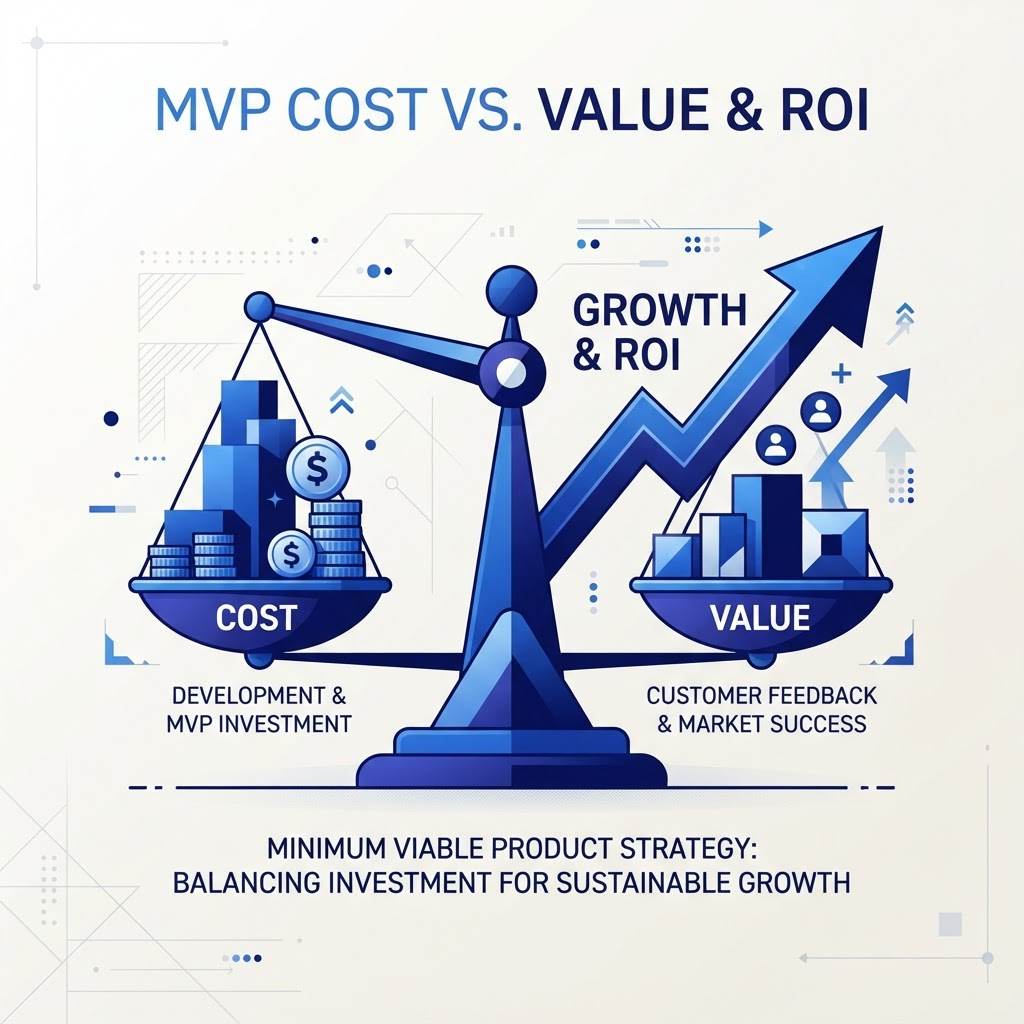
Founders often frame the MVP question as "how cheap can we build this?" The more useful frame is "what is the return on this investment?" An MVP’s value is not the software itself — it is the validated learning, the traction, and the leverage it creates with users and investors.
A $30,000 MVP that helps you raise a $1M seed round, or reach the first hundred paying customers, has an extraordinary return. The same $30,000 spent building the wrong features for a market that does not exist is a total loss. The difference is not the cost; it is whether the MVP was aimed at a real question.
Where MVP value actually comes from
The tangible returns of a well-executed MVP compound quickly, which is why speed to launch matters so much.
- Market validation: proof that people want and will pay for your solution.
- Fundraising leverage: a working demo and early traction de-risk your pitch.
- User feedback: real usage data that guides what to build next.
- First revenue: paying customers that fund the next stage.
- Team momentum: a shipped product energizes founders and hires alike.
How to maximize MVP ROI
Maximizing return starts with focus: build the smallest thing that can honestly test your riskiest assumption. Instrument it from day one so you learn from real behavior, not opinions. Launch to a narrow, reachable audience rather than trying to please everyone.
Then iterate fast. The MVP is the beginning of a learning loop, not the end of a project. Teams that treat launch as the start of the conversation with users consistently outperform those who disappear for another six months to build "version two".
Frequently asked questions
When aimed at a real, unvalidated question, yes. An MVP built without a clear hypothesis often wastes money.